Ask any farmer who has spent a wet October trying to get cover crops in the ground, and they will tell you the same thing: timing is everything. The window between harvest and the first hard frost is short, and the weather rarely cooperates. That is why I started watching drone seeding services with real interest a few seasons ago. What began as a curiosity has become a regular part of how I plan my autumn workload, and I am not alone.
The idea of spreading seed from the air is not new. Aerial seeding has been used for decades, mostly by fixed-wing aircraft over large forestry blocks or flooded rice paddies. But those operations were expensive, required big fields, and were about as precise as throwing a handful of rice at a target from across the room. Multicopter drones changed that. With a small agricultural drone, you can fly low, follow the contours of the land, and drop seed exactly where you want it. That shift in precision is what makes drone seeding services relevant to a modern farm, not just a novelty for tech enthusiasts.
What Drone Seeding Actually Looks Like on the Ground
If you have not seen one of these systems working, the first thing that strikes you is the sheer speed. A typical agricultural multicopter, like the DJI Agras series, can carry a hopper of seed and spread it across a field in a series of parallel passes. The pilot, or sometimes the autonomous flight controller, sets the route, and the drone follows it using RTK GPS for centimetre-level accuracy. That means no overlaps, no missed strips, and no guesswork.
On a recent job, we used a drone to overseed a paddock with a mix of clover and ryegrass. The field was too wet for a tractor, and the ground was too soft for a quad bike. The drone did the work in under an hour. A conventional spreader would have taken the best part of a day, and we would have left ruts that took weeks to heal. That is the practical difference. It is not just about speed; it is about access.
Where Drone Seeding Fits in Regenerative Agriculture
For anyone practising no-till farming or moving toward regenerative agriculture, the drill is often the bottleneck. Direct drilling into stubble or a standing cover crop can be slow, and sometimes the soil is simply too wet to risk a pass with heavy machinery. Drone seeding offers a way to get seed into the system without disturbing the soil structure. It is a tool that supports soil health rather than fighting against it.
One of the most promising uses is with cover crops. After the main crop comes off, the clock starts ticking. A drone can fly over the stubble and broadcast a mix of radish, vetch, and cereal rye in a matter of minutes. The seed sits on the surface, and the next rain works it into the soil. It is not perfect. Germination can be patchy if the seed does not get good soil contact, and a dry spell after sowing can be brutal. But when the conditions are right, it is hard to beat for speed and cost.
I have also seen drone seeding used to establish companion crops in standing maize, a technique that is gaining traction in the UK. The drone drops the seed between the rows while the maize is still growing, giving the understory a head start. That kind of intercropping is difficult with ground equipment, but a drone can do it without damaging the crop. It opens up possibilities that were simply not practical before.
The Technology Behind the Hype
When people ask me about drone seeding services, they often assume the drone is the whole story. The drone is only half of it. The other half is the software and the sensors that tell the drone where to go and what to do. Variable rate seeding, for example, requires a prescription map. You build that map from soil samples, yield data, or vegetation indices from crop monitoring flights. The drone reads that map and adjusts the seeding rate on the fly, putting more seed on the good ground and less on the poor patches. That is not a gimmick; it is agronomy executed with precision.
The hardware has come a long way too. Early agricultural drones were essentially modified camera platforms, but the current generation is built for work. The DJI Agras T30, for instance, has a spreading system designed for fertiliser and seed, with a hopper that can be swapped out for a spray tank. Yamaha has been in this space for years with its larger machines, and even companies like Aerovironment, better known for military drones, have agricultural applications. The point is that this is not a toy market anymore. The equipment is robust, and the support network is growing.
More Than Just Seed
Once you have a capable drone and the software to run it, the same platform can do a surprising amount of work. Fertiliser spreading is an obvious one. Instead of broadcasting a uniform rate across the field, you can target areas that need a boost, which saves money and reduces runoff. Pesticide application is another. Spot spraying for weeds or pests, rather than a blanket treatment, is better for the environment and your wallet. Some services even spread slug pellets, which is a godsend in a wet spring when the ground is too soft for a spreader.
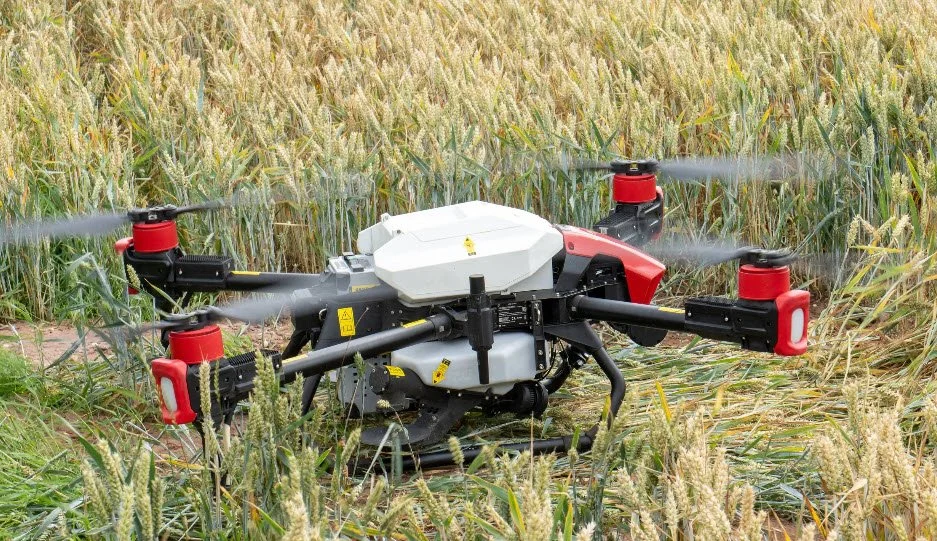
That versatility is one reason I think drone seeding services will stick around. A farmer who invests in the capability for one job soon finds a dozen others. The economics work differently than buying a tractor. A drone is a fraction of the cost, and it does not compact the soil. It also gives you a different kind of data. The same sensors that guide the drone can be used for crop monitoring, building a picture of field variability over the season.
What to Watch Out For
I would be doing you a disservice if I painted this as a miracle solution. Drone seeding has real limitations. The first is seed size and weight. A drone can only carry so much, and large seeds like beans or peas are heavy. In practice, most drone seeding is done with small seeds, like grass, clover, or cereal grains. Broadcasting large seeds is possible, but the coverage and seed-to-soil contact can be poor. Another limitation is weather. Drones do not fly in strong winds or rain, and a gusty day can turn a precise operation into a mess.
There is also the question of regulation. In the UK, flying a drone for commercial work requires a valid CAA permission. That means training, insurance, and ongoing compliance. It is not insurmountable, but it is a hurdle. Most farmers I know do not want to become drone pilots; they want to farm. That is why many choose to hire a contractor who brings the drone and the expertise. It is a service model that works well, and it lowers the barrier to entry.
Making the Call
So, is drone seeding right for your farm? It depends. If you are looking to establish cover crops after harvest, overseed a grazing pasture, or get a catch crop in while the weather holds, it can be a game-changer. If you are trying to drill wheat into heavy clay in November, you are probably better off with a direct drill and a good forecast. The key is to match the tool to the job.
I have seen farms that run their own drones and do a brilliant job. I have also seen farms that bought a drone, used it twice, and let it gather dust. The truth is that drone seeding services are most valuable when you have a clear plan and realistic expectations. The technology is impressive, but it is still agronomy. You need to know what seed to use, when to fly, and what to do if the rain does not come.
For me, the biggest win has been the flexibility. I can react to a weather window in a way that was impossible before. Instead of waiting for the ground to dry enough for a tractor, I can fly a drone over a wet field and get the seed in. That extra week or two of growth can make a real difference to the next crop. It is not about replacing the drill; it is about adding another option to the toolbox.
If you are curious, the best way to learn is to see it done. Talk to a neighbour who has used a service, or ask a contractor for a demo. Watch how the drone handles the field, how the operator sets the route, and how the seed lands. You will quickly see whether it fits your system. And if it does, you might find yourself planning next season with a drone on the list.